
What is happening in Norway? The international press is also asking this question, and there is not one right answer, but many.
Most of those who answer are beating around the bush. There is unmusical input that people tend to close their ears to. This is one such response.
Norway is rich, with a one-sided business sector. As one stockbroker put it, only oil, gas and energy are profitable here. Other things – such as batteries – have ‘no special prerequisites’. So that’s why this is going wrong; it’s a waste. In other words, cobbler, stick to your last.
This industrial strategy is worth analysing. But here we will focus on the consequences of this mindset.
Renewable energy is largely desired as a support for other activities, not as a business in its own right. Therefore, little is developed and prices are kept low. Developers know this, and most things come to a halt. This kind of thinking does not apply to oil, where the aim is to develop as much as possible and explore as much as possible – to keep production up.
The major parties are behind this. This is Norwegian policy now, and looks set to remain so.
Is there a market for oil?
This begs the question: what about the market for all this oil?
Our assessment is that demand will peak in 2024 or 2025. For every electric car that hits the road, there are large quantities of oil that go unsold. We encourage readers to think about how many litres a new petrol car consumes over 15 years or so. Then multiply that by all the electric cars: they’re not dominant yet, but together they’re numerous enough to affect the overall oil market. Of course, there are short-term headwinds for EVs in some countries from time to time; that’s the case with everything. There are also big politics surrounding the Chinese entry into the (electric) car market.
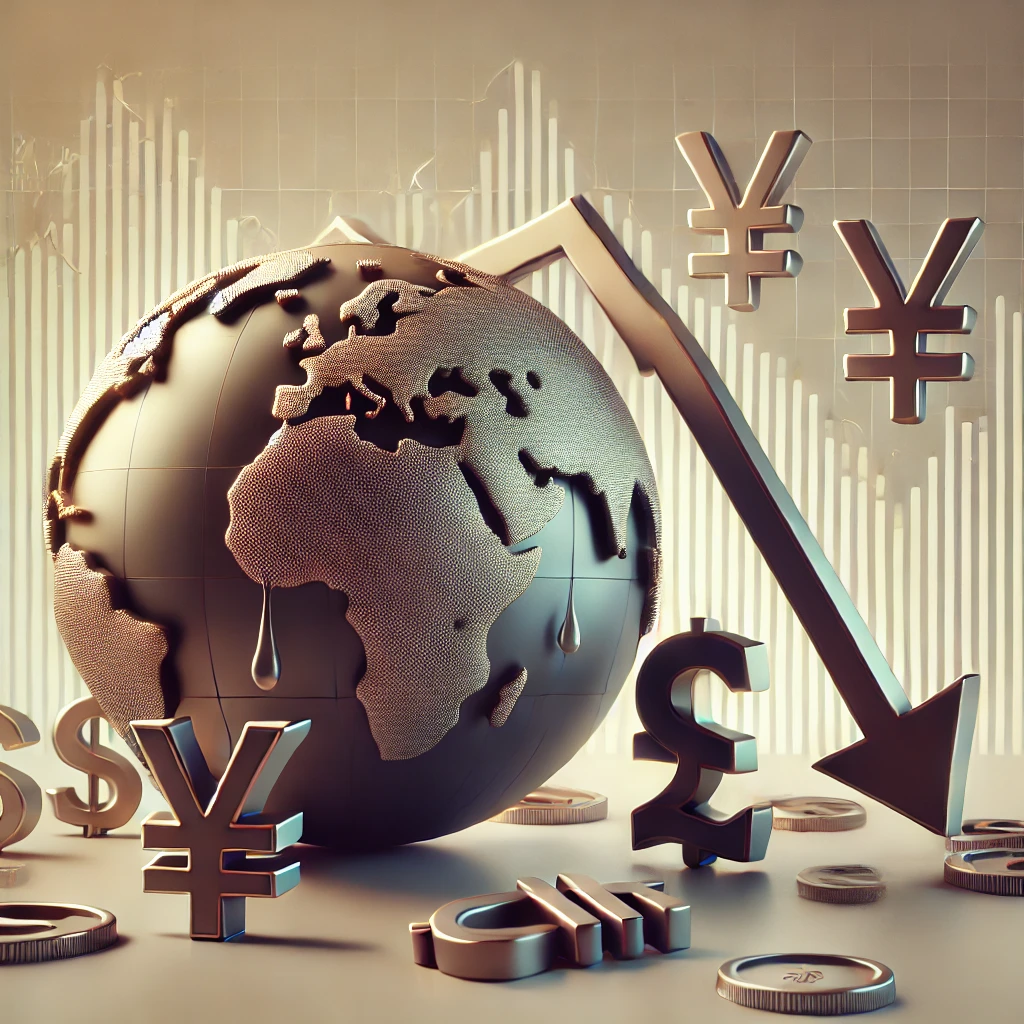
Then there was the gas market. It’s true that Europe needs more gas at the moment, for a transitional period. But this won’t last long, as Europe is working to phase out gas. Azerbaijan was asked to develop in the Caspian Sea to supply the EU during this period, but the country was smart enough to check with international banks. These banks refused to finance something so uncertain and short-lived. Norway hasn’t made this check – they’ve decided to go straight for it.
It may be that the EU will not be able to stop using gas, as they want. But that’s a big risk to take, and so investment in oil and gas is uncertain. Regardless of what you think about the climate side of things.
When the country as a whole is focussed on oil and gas, and this is uncertain, the economy as a whole also becomes uncertain. In any case, all economists agree on one thing: uncertainty leads to higher required rates of return. The required rate of return for Norway as a country is the interest rate, which is what it takes to hold money in Norwegian kroner. So given the oil investment, interest rates must be higher than in other countries.

Is there a market for gas?
When you’re only doing what you’ve done before, and this is uncertain, the exchange rate will be lower, especially when you don’t see any improvement, rather the opposite.
Entirely different industries could be developed – but it is believed that there are no conditions for this. This would make the country worth less, and consequently the exchange rate would be lower – all other things being equal.
The reaction from politicians to this is that ‘a low exchange rate is an advantage’ because it increases competitiveness. This is true in itself. You can buy fewer TVs with your salary, or any other goods. Wage settlements are often about the opposite, namely increasing wages. But when it comes to currency, you want lower purchasing power. Does anyone see the irony? Regardless, if you see the connection, you can see that increased dependence on oil leads to lower wages. It’s also somewhat true.
Why a low exchange rate?
All economists also agree that a country’s innovative strength has something to do with the exchange rate.There are other factors as well, of course, but the power of innovation is not commented on much by other media.‘You could develop completely different industries – but the view is that there are no conditions for that. This would make the country worth less, and consequently the exchange rate would be lower – all other things being equal. The reaction from politicians to this is that ‘a low exchange rate is an advantage’, because competitiveness will then be higher. This is true in itself. You can buy fewer TVs with your salary, or any other goods. Wage settlements are often about the opposite, namely increasing wages. But when it comes to currency, you want lower purchasing power. Does anyone see the irony? Regardless, if you see the connection, you can see that increased dependence on oil leads to lower wages.
This is also somewhat true because the profits from oil end up abroad in the oil fund, while lower purchasing power is something most people feel.
Lower exchange rate leads to higher inflation
The correlation between inflation and a low exchange rate is also intriguing. A low exchange rate means that export companies earn more, as they receive higher revenues in Norwegian kroner. This results in higher profits for the companies. This leads to higher profits in the ‘frontline industries’ – as they are often called. Employees in these sectors therefore receive higher wages. Subsequently, the other sectors copy the ‘frontline industries’ – and when everyone gets higher wages, prices go up. There’s talk of breaking this chain, but that’s easier said than done! After all, the prices of imported goods go up, and Norway imports most of them. According to economic theory, you should then start producing domestically some of what was bought abroad, but this doesn’t work, since ‘you don’t have the conditions for this’.
Norwegians had very good wages a few years ago, but now they are only on a par with other countries in Northern Europe. What’s more, it’s on its way down due to the falling exchange rate.
Attitudes in Norway are based on the notion that we have the highest salaries. For engineers and other managers, this has not been true for a long time. The undersigned once politely declined an offer of a position as a Senior Economist in China, with double the salary compared to Norway. And engineers? Here’s an example from a Norwegian project in Asia: the manager drums up the Norwegian employees and says that unfortunately things are going a bit badly at the moment, and in order to rectify this, the engineers must switch from Norwegian to local salaries. The response? Yippee, because local wages were higher than in Norway. Now, it should be said that Oslo changed its mind when it realised that the decision led to an increase in costs.
Something to think about: Chinese tourists are travelling around Europe – especially before Covid – and emptying luxury stores of watches and everything that can be bought. Where do they get the money? China is no longer driven by low wages, but by high levels of expertise. At least at management level.
You never know, but the likelihood is that the low exchange rate will continue and interest rates will remain high – and that this will balance the situation until Norway opens its eyes to try something new.
Leave a Reply